

What to Expect When Starting NAD+ Injection Therapy
Medical Disclaimer: This article is for informational and educational purposes only and is not medical advice. NAD+ injection therapy may not be appropriate for everyone and should only be considered under the guidance of a licensed healthcare professional. Always consult your doctor or qualified medical provider before starting NAD+ injections, especially if you have a medical condition, take prescription medications, are pregnant or breastfeeding, or have concerns about side effects.
NAD+ injection therapy has gained serious attention for its potential to support cellular energy, cognitive performance, and overall vitality.
If you're considering this treatment, it's natural to have questions about what the process actually looks like from day one. The experience is more structured than most people expect, and knowing what lies ahead makes it far easier to commit with confidence.
This guide walks you through five key things you can expect once you start NAD+ injection therapy, so you step into your first session fully prepared.
1. A Personalized Intake Assessment Before Your First Injection
Before you receive a single injection, your provider will conduct a thorough intake assessment.
This step is not a formality. It directly shapes how your NAD+ therapy protocol gets designed.
What the Assessment Covers
Expect a detailed conversation about your health history, current medications, lifestyle habits, and treatment goals. Your provider needs to understand your baseline before recommending a dosage or frequency.
Some providers also request basic lab work to get a clearer picture of your current NAD+ levels and metabolic function. This information allows them to tailor the protocol specifically to you rather than applying a one-size-fits-all approach.
Why Your Goals Matter From the Start
Your goals, whether that's improved energy, sharper focus, faster recovery, or support for a specific health concern, directly influence how the protocol gets structured.
NAD+ shots are not administered the same way for every patient. Someone focused on cognitive performance may receive a different dosage frequency than someone primarily targeting physical recovery.
Communicating your priorities clearly at this stage leads to a more targeted and effective outcome.
Questions to Ask Your Provider Before Starting
Use this initial consultation to ask about expected timelines, dosage levels, and what success looks like for your specific situation. Ask whether your current medications could interact with NAD+ therapy, and find out how progress gets tracked over time.
A knowledgeable provider will welcome these questions and give you direct, specific answers rather than vague reassurances. The more informed you are at the start, the better positioned you are to follow through consistently.
2. Mild Side Effects During the First Few Sessions
It's common to experience some mild side effects during your first few NAD+ injection sessions. These reactions are often temporary and typically resolve on their own as your body adjusts to the treatment.
Common Physical Reactions to Expect
Some people notice mild flushing, a warm sensation, or slight nausea during or shortly after the injection. Others report minor discomfort at the injection site, such as brief tenderness or redness.
These reactions are generally short-lived and tend to diminish as your sessions continue. Your provider may adjust the infusion rate or dosage slightly if the discomfort feels significant during your first visit.
Why These Reactions Happen
NAD+ plays a direct role in cellular metabolism, and introducing it in concentrated form can temporarily accelerate certain biological processes.
This activation effect is often what causes the flushing or warmth some patients notice. It does not indicate a problem. In fact, some providers consider mild warmth a signal that the therapy is working as intended.
But any reaction that feels severe or unusual should be reported to your provider immediately rather than dismissed.
How to Reduce Discomfort in Early Sessions
Staying well hydrated before and after each session can reduce the intensity of early side effects. Eating a light meal beforehand also helps, since receiving NAD+ therapy on an empty stomach can increase the likelihood of nausea.
If you feel anxious during the session, let your provider know. They can slow the administration rate, which often makes the experience noticeably more comfortable without reducing the therapy's effectiveness.
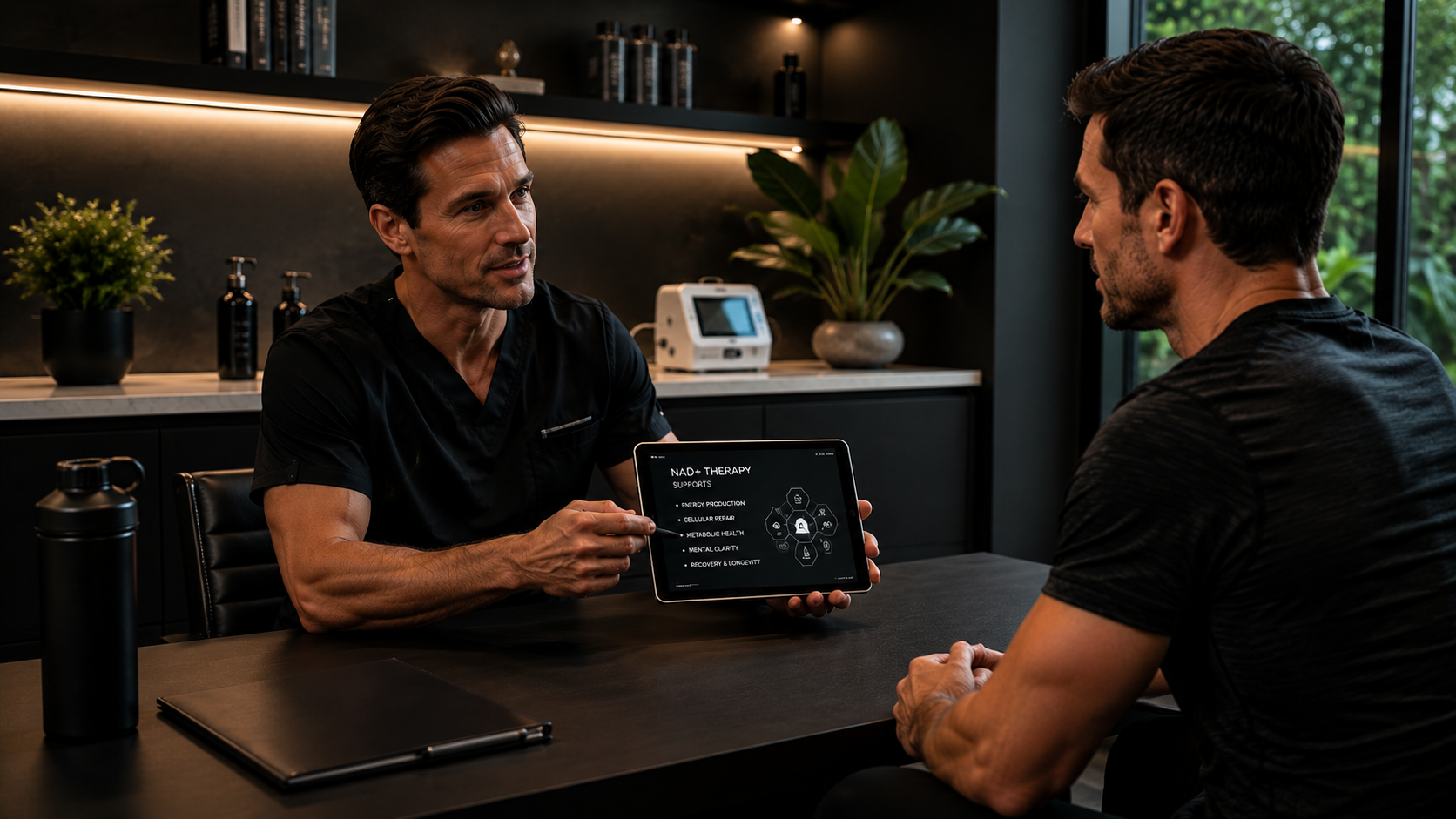
NAD+ injections should be administered by a qualified medical provider using sterile technique and properly sourced products. Ask your provider about dosing, potential side effects, contraindications, and whether the product is compounded. Compounded medications are not FDA-approved, which means the FDA does not verify their safety, effectiveness, or quality before they are marketed.
3. Some People Report Changes in Energy, But Results Vary
One of the most frequently reported benefits of NAD+ injection therapy is a meaningful increase in energy, and many patients notice this shift within just a few days of their initial sessions.
How NAD+ Supports Cellular Energy Production
NAD+ is a coenzyme that plays a direct role in how your cells produce energy through a process called oxidative phosphorylation.
As NAD+ levels rise in the body, mitochondrial function improves, and your cells become more efficient at converting nutrients into usable energy. This is not a stimulant effect. It's a biological shift at the cellular level, which is why the energy boost tends to feel steady and sustained rather than jittery or artificial.
What the Energy Increase Actually Feels Like
Some patients report feeling more energetic after starting NAD+ injection therapy, while others notice little or no immediate change.
Timing can vary based on health history, dosage, frequency, sleep, nutrition, medications, and the reason someone is seeking treatment.
Because the evidence around many wellness uses of NAD+ therapy is still developing, it is better to view energy changes as a possible patient-reported outcome, not a guaranteed result.
Factors That Influence How Quickly You Notice Results
Your current NAD+ levels, age, lifestyle, and the specific dosage used all affect how quickly results become noticeable. Younger, healthier individuals with moderately depleted NAD+ levels may notice changes faster than those with more significant depletion.
Consistency matters considerably here. Patients who attend sessions as scheduled and support the therapy with adequate sleep and hydration tend to experience results sooner and more clearly than those who approach the protocol inconsistently.
4. Gradual Improvements in Mental Clarity and Focus
NAD+ is involved in cellular metabolism, and researchers continue to study its relationship to aging, brain health, and cellular repair. Some wellness clinics market NAD+ therapy for focus or “brain fog,” and some patients report subjective improvements.
However, cognitive results are not guaranteed, and anyone considering treatment should ask their provider what evidence supports its use for their specific goals.
The Connection Between NAD+ and Brain Health
NAD+ supports the activity of enzymes called sirtuins, which protect neurons and regulate DNA repair within brain cells.
As NAD+ levels in the body increase, the brain benefits from reduced oxidative stress and improved cellular repair. Over time, this translates to sharper focus, faster mental processing, and better memory retention. These are not placebo effects.
Research continues to support the connection between NAD+ availability and neurological health.
What Mental Clarity Improvements Look Like in Practice
Patients often describe a reduction in what's commonly called "brain fog," that frustrating state where concentration is difficult, and thoughts feel sluggish. You may notice that tasks requiring sustained focus become less draining, or that you retain information more easily.
Creative thinking and problem-solving may also feel more fluid. These changes tend to emerge gradually over two to four weeks of consistent therapy rather than appearing dramatically after one session.
Supporting Cognitive Gains Outside of Sessions
NAD+ therapy works best as part of a broader approach to brain health. Regular physical activity, quality sleep, and a diet low in processed foods all support the cognitive improvements that NAD+ therapy initiates.
Reducing alcohol consumption is also worth considering, since alcohol directly depletes NAD+ in the body. The more you support your sessions with these complementary habits, the more pronounced and lasting your mental clarity improvements will be.
5. A Structured Dosing Schedule You'll Need to Commit To
NAD+ injection therapy is not a one-and-done treatment. To experience lasting results, you need to follow a structured dosing schedule, and that requires genuine commitment over a set period of time.
Typical NAD+ Therapy Schedules Explained
Most initial protocols involve multiple sessions per week over a period of several weeks, often ranging from two to four weeks of more frequent dosing.
After this loading phase, many patients transition to a maintenance schedule that involves less frequent sessions, typically once or twice per month.
Your provider will outline a schedule based on your assessment results and treatment goals. Sticking to this schedule is what allows NAD+ levels to build and stabilize in the body.
Why Skipping Sessions Undermines Results
NAD+ levels in the body naturally decline over time, particularly under stress, poor sleep, or illness. If you miss sessions during your initial protocol, the cumulative benefit you've built can diminish quickly.
Inconsistency during the loading phase in particular tends to produce underwhelming results, which leads some patients to incorrectly conclude that the therapy doesn't work for them.
Treating your schedule with the same priority you'd give any medical appointment protects your investment in the therapy.
Planning Your Life Around the Commitment
Before you start, take a realistic look at your schedule and identify any conflicts that could disrupt your sessions. Most NAD+ injection sessions last between one and four hours depending on the dosage, so you'll need to block out meaningful time. C
onsider booking sessions on days with lighter workloads. Talk to your provider about rescheduling policies and what to do if you need to miss a session unexpectedly. The more intentional you are about scheduling from the beginning, the smoother the experience will be.
Conclusion
NAD+ injection therapy is a wellness treatment that some people explore for energy, focus, recovery, or general vitality.
Before starting, it is important to understand the intake process, possible side effects, treatment schedule, costs, and the limits of the current evidence.
Speak with a licensed healthcare professional who can evaluate your health history, medications, goals, and whether this therapy is appropriate for you.
By knowing what to expect, from your initial assessment to your dosing schedule, you set yourself up for a more informed and effective experience.
Start with clear goals, stay consistent, and communicate openly with your provider throughout the process. The results are worth the commitment.
Do not start NAD+ injection therapy based solely on online information. Speak with a licensed healthcare professional who can review your health history, current medications, goals, and risk factors.