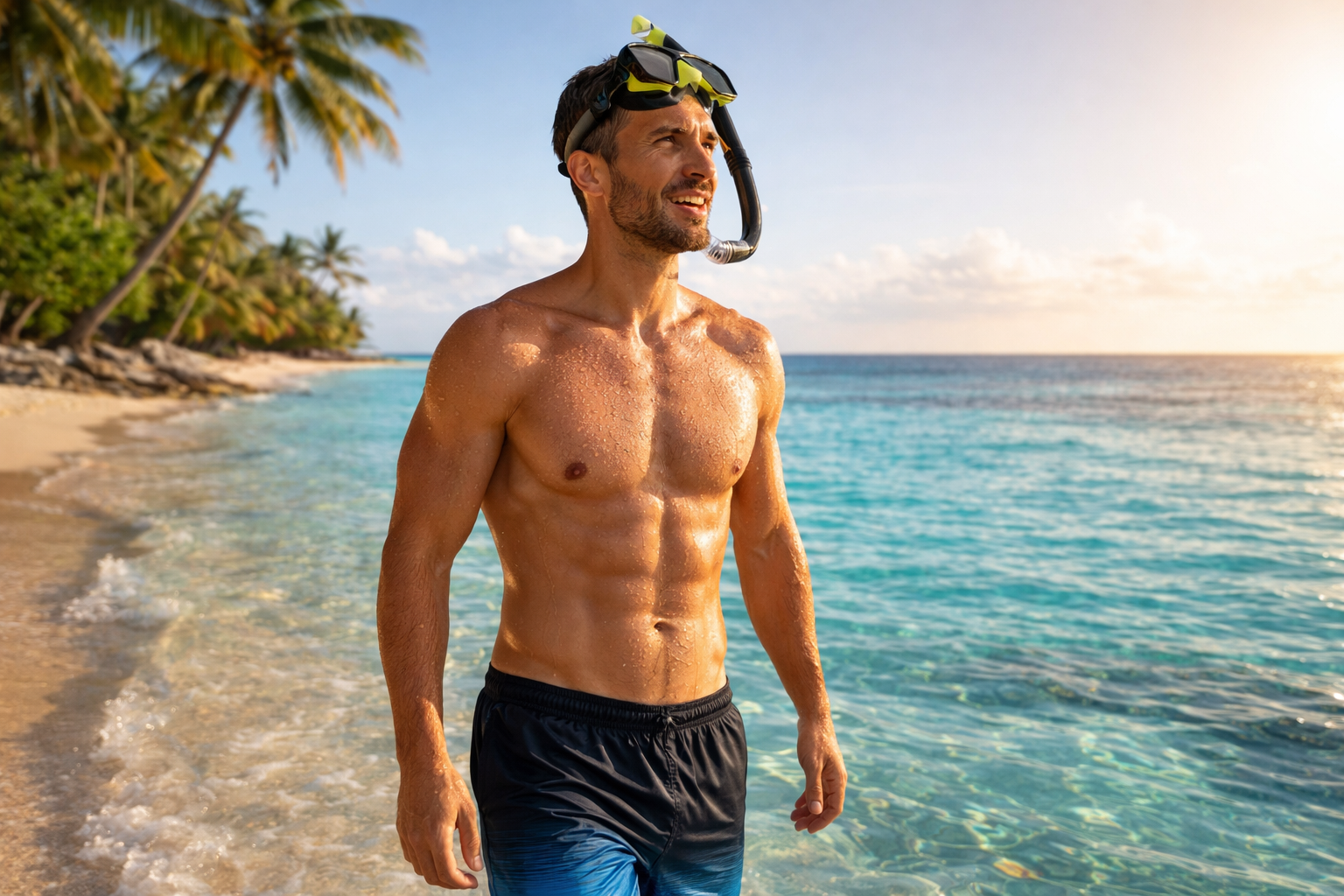
Snorkeling as Exercise: The Most Underrated Travel Workout
Travel has a way of pulling us out of our routines. For many people, that means exercise falls by the wayside the moment a vacation begins.
Gyms feel restrictive, hotel treadmills are uninspiring, and structured workouts can feel out of place when you’re surrounded by turquoise water and open skies. That’s exactly where snorkeling shines.
Snorkeling isn’t just a leisure activity or a sightseeing add-on—it’s a legitimate, enjoyable form of exercise that fits perfectly into travel. It’s low impact, deceptively demanding, and uniquely immersive.
When done regularly during a trip, snorkeling can provide meaningful cardiovascular work, muscular engagement, and mental restoration, all without feeling like a “workout.”
Having snorkeled extensively—especially in the Bahamas—I’ve come to see snorkeling as one of the most underrated physical activities you can do while traveling.
It combines movement, resistance, breath control, and sustained effort in a way few vacation activities can.
This article breaks down why snorkeling is such a powerful form of exercise, the physical benefits of snorkeling, and how to treat snorkeling as intentional movement rather than passive recreation.
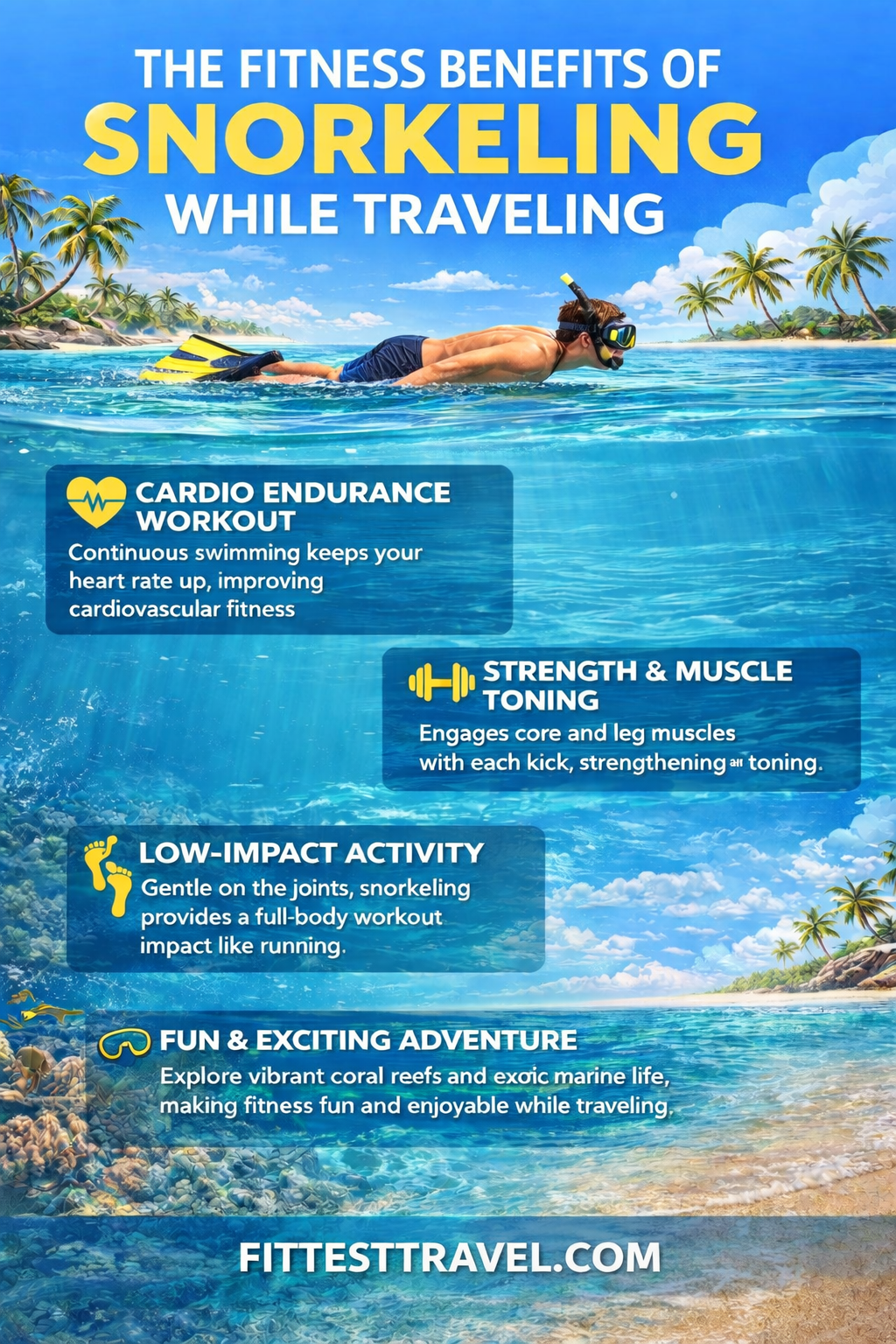
Why Snorkeling Is an Ideal Physical Activity While Traveling
One of the biggest challenges with staying active while traveling is friction. Anything that feels complicated, time-consuming, or separate from the experience usually gets skipped. Snorkeling has almost zero friction.
You don’t need a gym.
You don’t need a structured plan.
You don’t need special timing.
You just need water, a mask, fins (optional), and the willingness to move.
Snorkeling naturally integrates exercise into travel because it aligns with why people travel in the first place: exploration.
Instead of counting reps or minutes, you’re moving from reef to reef, following schools of fish, scanning the ocean floor, and drifting with currents. The exercise happens as a byproduct of curiosity.
From a travel-fitness perspective, snorkeling checks several rare boxes at once:
It’s destination-specific (you can’t replicate it at home easily)
It’s low impact (easy on joints)
It scales from easy to demanding depending on conditions
It feels rewarding instead of obligatory
That combination is exactly what makes snorkeling such an effective physical activity while traveling.
The Physical Benefits of Snorkeling as Exercise
1. Cardiovascular Conditioning Without Impact
Snorkeling provides steady-state cardiovascular work, particularly when you’re swimming continuously rather than floating passively. Kicking against water resistance elevates heart rate, often into a moderate aerobic zone.
Unlike running or high-impact cardio, snorkeling places almost no stress on joints. The buoyancy of the water supports your body weight, making it an excellent option for people who want cardiovascular exercise without pounding knees, hips, or lower backs.
When snorkeling for 30–60 minutes, especially in open water with mild currents, your heart rate stays elevated in a sustainable, controlled way. Over multiple days of travel, this adds up quickly.
2. Lower Body Strength and Endurance
The most obvious muscular demand of snorkeling comes from the legs.
Fins dramatically increase resistance, turning each kick into loaded movement. The calves, hamstrings, quadriceps, and glutes all work continuously, often for extended periods without rest.
What’s unique is the endurance component. Unlike traditional strength training where effort comes in sets and reps, snorkeling requires prolonged, rhythmic output. Your legs don’t get breaks unless you stop swimming.
After long snorkeling sessions in the Bahamas—particularly when covering distance rather than staying in one spot—it’s common to feel deep muscular fatigue in the calves and hips, similar to a long hike or cycling session.
3. Core Engagement and Postural Control
Snorkeling demands constant core engagement, even if it’s subtle.
Maintaining a horizontal body position, stabilizing against currents, adjusting direction, and keeping your torso aligned all require the deep stabilizing muscles of the core. Unlike crunches or planks, this engagement happens dynamically and unconsciously.
In rougher water or when navigating coral formations, the core becomes even more active as you control rotation, balance, and breathing.
Over time, this translates into improved trunk stability and endurance—an often overlooked benefit of snorkeling as exercise.
4. Upper Body Contribution and Shoulder Mobility
While the legs do most of the work, the upper body isn’t passive. Arms are frequently used for balance, gentle sculling, direction changes, and stabilization—especially when snorkeling near reefs or managing mild currents.
Shoulders move through natural ranges of motion without load, promoting mobility rather than strain. For travelers who lift weights regularly, snorkeling provides a refreshing contrast: movement without compression or joint stress.
5. Breath Control and Respiratory Efficiency
Snorkeling forces you to slow your breathing.
Because you’re breathing through a snorkel, each breath becomes intentional. This controlled breathing pattern enhances respiratory efficiency and promotes a calm, parasympathetic state.
Over long sessions, you develop a rhythm: kick, glide, breathe. This rhythm reduces unnecessary tension and teaches efficient oxygen usage—similar to what endurance athletes experience in swimming or cycling.
It’s physical conditioning paired with nervous system regulation, which is rare in most forms of exercise.
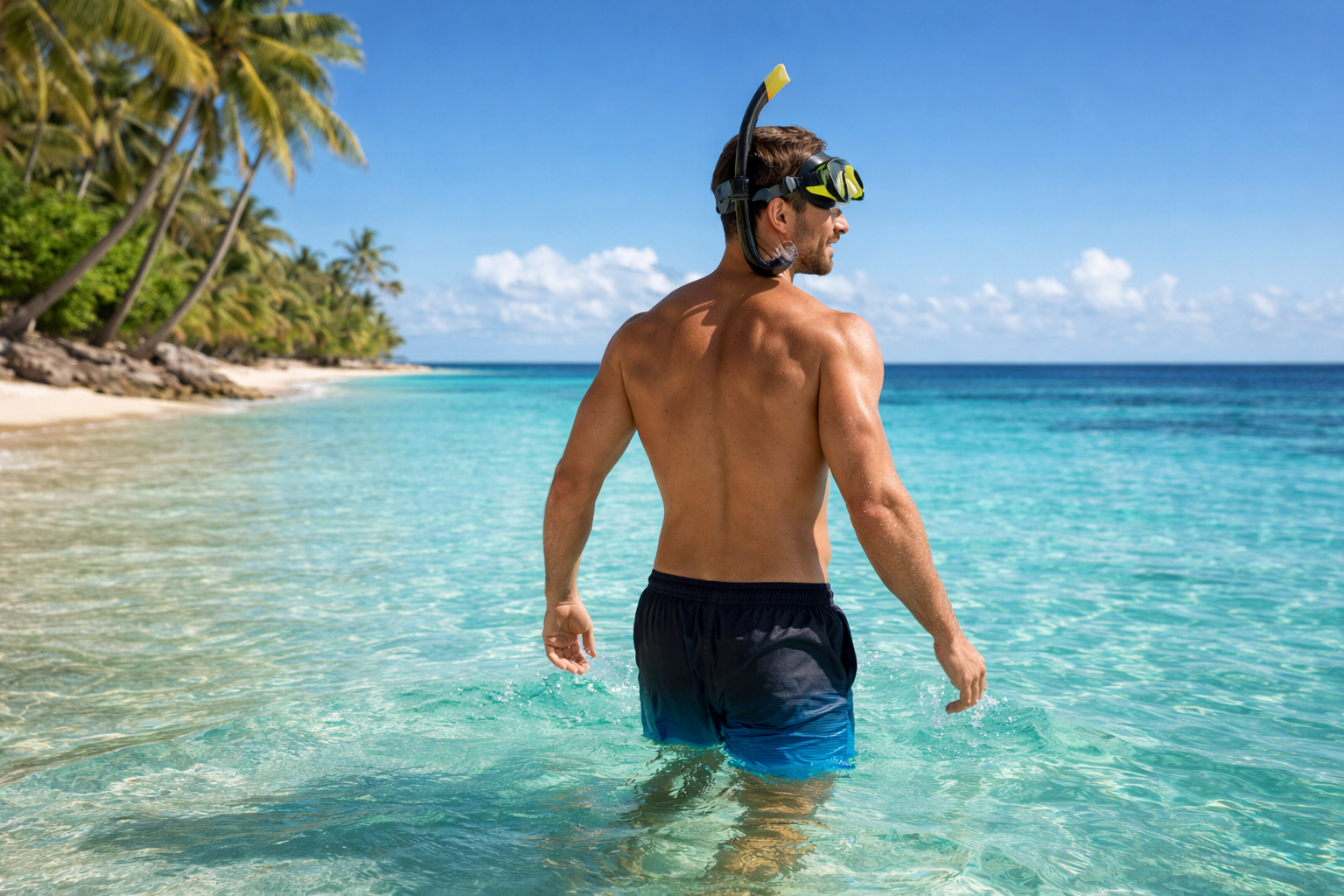
Personal Experience: Snorkeling in the Bahamas
Snorkeling in the Bahamas was the moment I truly understood snorkeling as exercise, not just recreation.
The water clarity alone changes the experience. Visibility often extends dozens of feet, which naturally encourages movement. You don’t just hover—you travel. You chase formations, explore drop-offs, and follow marine life along the reef.
On multiple trips, I found myself snorkeling for 45 to 90 minutes at a time, far longer than I would ever spend doing traditional cardio on vacation. The difference was psychological: it never felt like exercise.
One session in particular stands out. The water was calm, but there was a gentle lateral current. To stay oriented, I had to maintain steady forward kicks rather than drifting.
By the time I returned to shore, my calves were burning, my breathing was elevated, and my entire body felt worked—but mentally, I felt refreshed rather than drained.
The next morning, I noticed a mild soreness in my legs and hips, the same kind of soreness you’d expect after a long hike or weighted walk.
That was the moment it clicked: snorkeling had quietly replaced a workout without ever feeling like one.
Across multiple days, snorkeling became my primary form of movement. I didn’t miss the gym. I didn’t feel sedentary. If anything, I felt more physically engaged than on trips where I forced myself into hotel workouts.
Snorkeling vs. Other Vacation Exercises
Compared to other popular travel fitness options, snorkeling holds its own surprisingly well.
Walking: Great for volume, but limited resistance
Swimming laps: Excellent exercise, but less immersive and often unavailable
Kayaking or paddleboarding: Effective, but time-limited and equipment-dependent
Hotel gym workouts: Convenient but uninspiring
Snorkeling combines movement, resistance, endurance, and exploration into one seamless activity. It doesn’t replace strength training long-term, but during travel, it’s one of the most efficient ways to stay active without sacrificing enjoyment.
How to Maximize Snorkeling as Exercise
If you want snorkeling to be more than floating and sightseeing, a few intentional adjustments make a big difference:
Use fins – They dramatically increase resistance and calorie expenditure
Cover distance – Swim along reefs instead of staying stationary
Maintain steady movement – Avoid constant stopping unless observing something specific
Snorkel consistently – Daily sessions compound benefits over a trip
Respect conditions – Currents add challenge, but safety comes first
With minimal effort, snorkeling becomes a legitimate training stimulus rather than passive leisure.
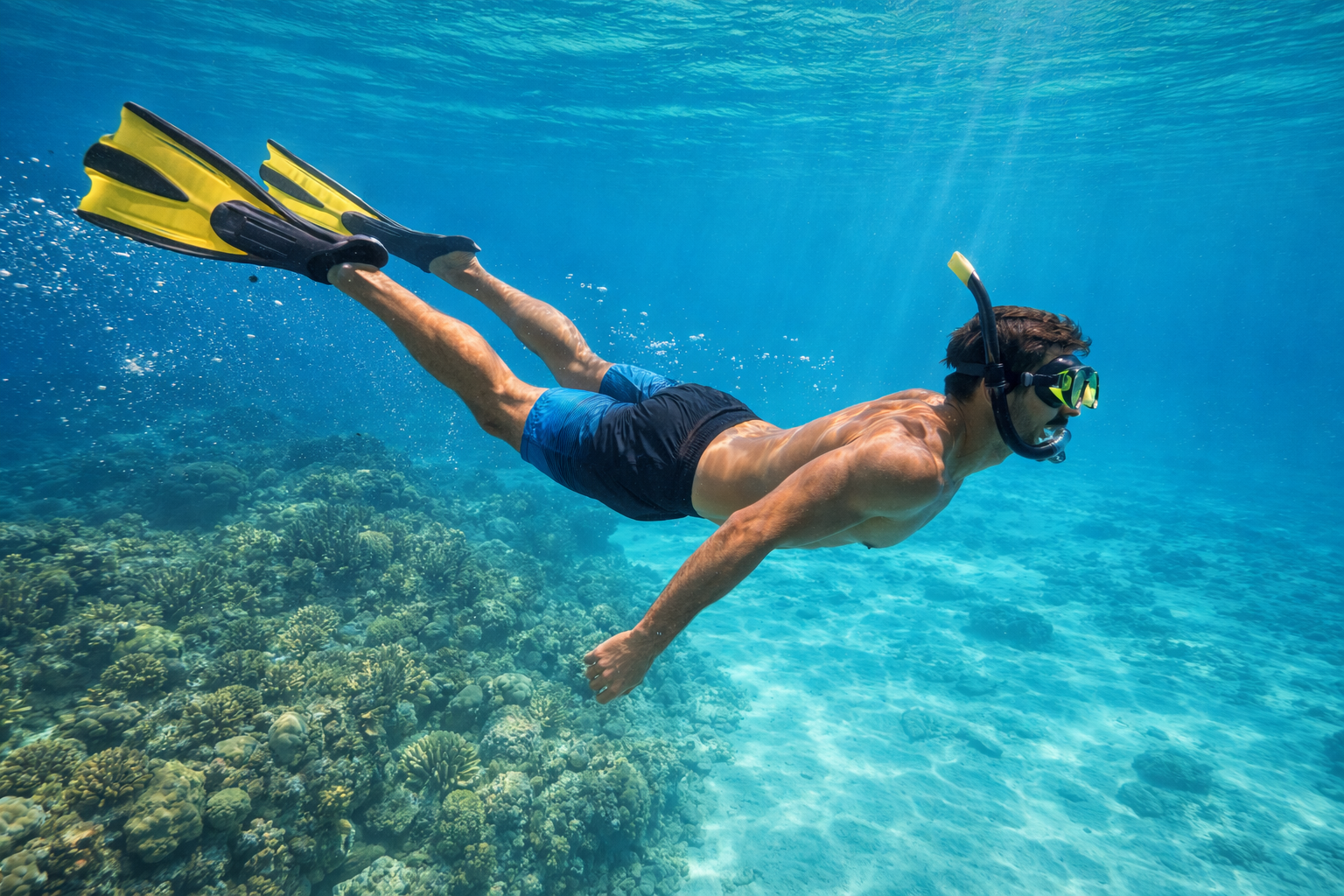
Final Thoughts: Snorkeling as Travel Fitness Done Right
Snorkeling sits at the intersection of fitness, exploration, and restoration. It delivers cardiovascular work, muscular endurance, and mental clarity without the friction or monotony that often kills exercise routines while traveling.
From firsthand experience—especially snorkeling in the Bahamas—it’s clear that snorkeling isn’t just “better than nothing.” Done intentionally, it’s one of the best physical activities you can do while traveling.
It’s movement disguised as adventure. And that’s exactly why it works.
For travelers who want to stay active without turning vacation into obligation, snorkeling as exercise isn’t just a good option—it’s the smart one.