

The Benefits of Online Fitness Software for Frequent Travelers
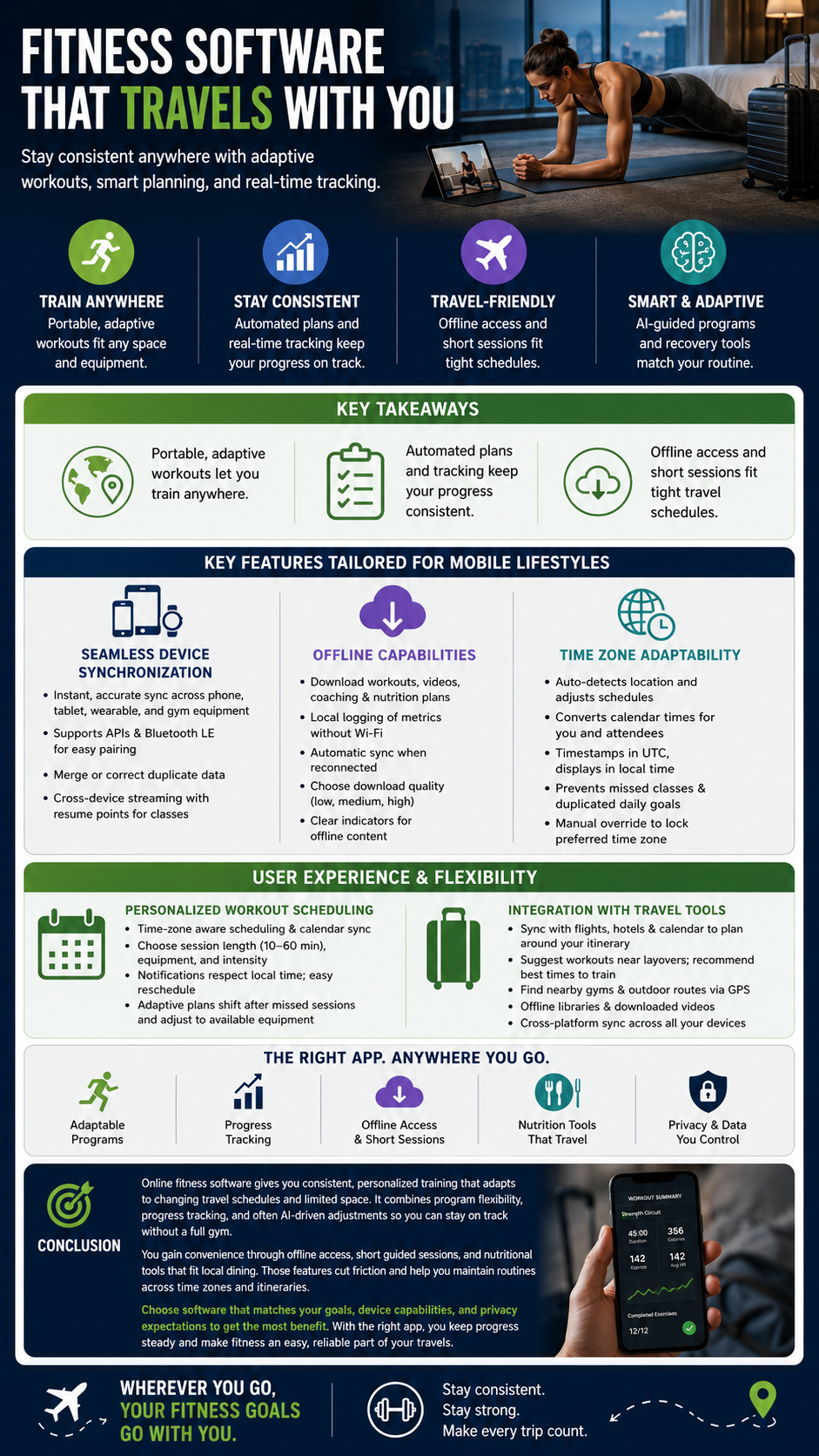
You travel often, and online fitness software bends to your schedule, equipment limits, and changing spaces so you can keep training without dragging a suitcase full of gear.
These platforms give you on-demand workouts, adaptive plans, and progress tracking that move with you, not against your itinerary.
You get tailored, portable workouts, automated planning, and real-time tracking so staying consistent feels possible no matter where you are.
Short sessions, offline options, and instruction that fits small spaces make it easy to turn hotel rooms and short layovers into productive training time.
Tap into adaptive programs, AI-guided sessions, and recovery tools that match busy travel routines, and you’ll spend less energy figuring out how to exercise and more energy actually doing it.
Key Takeaways
Portable, adaptive workouts let you train anywhere.
Automated plans and tracking keep your progress consistent.
Offline access and short sessions fit tight travel schedules.
Key Features Tailored for Mobile Lifestyles
You need fitness software that keeps pace with shifting schedules, spotty connectivity, and multiple devices. The features below prioritize continuity, reliability, and simplicity so you can stick to a routine while traveling.
Seamless Device Synchronization
Syncing must be instant and accurate across phone, tablet, wearable, and hotel or airport gym equipment.
Look for apps that use background sync and incremental updates so your workout progress, heart rate, and completed sessions appear the same on every device within seconds.
Support for standard APIs and Bluetooth LE lets you pair heart-rate monitors, smart scales, and treadmills without repeated setup. The app should also let you manually correct or merge duplicate entries when devices report conflicting data.
If you follow streaming classes, services like Perspire Tv that provide cross-device playback and resume points reduce friction between devices and time zones.
Offline Capabilities
Offline access should include full workout libraries, saved video coaching, and local logging of metrics. The app ought to download guided sessions, exercise demonstrations, and nutrition plans to internal storage so you can train on flights or in remote areas without Wi‑Fi.
Local caching must queue activity logs and media uploads, then automatically push them when you reconnect. Prioritize apps that let you set download quality (low, medium, high) to manage storage and provide clear indicators of what content is available offline.
Time Zone Adaptability
Time zone handling must prevent missed live classes and inaccurate logs. The app should detect your location and offer to shift scheduled events automatically while keeping original class times visible in the source zone.
Calendar integrations need to convert event times for both your device and any attendees. For metrics, the app must timestamp activities in UTC and display them in local time, avoiding duplicated daily goals when you cross the International Date Line.
Give yourself control with a manual override so you can lock schedules to a preferred time zone when necessary.
User Experience and Flexibility
You get apps that bend around travel realities: scheduling that adapts to time zones, airport- and hotel-friendly workouts, and integrations that reduce friction when plans change. Expect concrete controls for timing, equipment options, and syncing with travel tools so you stay consistent without reworking your routine.
Personalized Workout Scheduling
You can set workouts around flights, meetings, and sleep windows by using features like time-zone-aware scheduling and calendar sync.
Choose session lengths (10–60 minutes), equipment filters (none, bodyweight, resistance bands), and preferred intensity so the app presents only suitable options for each stop.
Push notifications respect local time and let you postpone or reschedule a session with one tap. Many platforms offer adaptive plans that shift later workouts forward after missed sessions and dynamically reassign exercises when you mark equipment unavailable.
These systems reduce manual planning and preserve progression without forcing long gym visits.
Integration with Travel Tools
Linking the app to your calendar and travel itinerary cuts double entry and prevents conflicts. When you import flight or hotel reservations, the app can suggest workouts near layovers, recommend morning or evening sessions based on your arrival time, and flag days when only short routines are realistic.
GPS and local search integrations help you find nearby gyms or safe outdoor routes when equipment is limited. Expect features like offline exercise libraries and downloaded videos so you can train on planes or in rural areas without connectivity. Cross-platform sync keeps your progress visible across phone, tablet, and wearable.
Conclusion
Online fitness software gives you consistent, personalized training that adapts to changing travel schedules and limited space.
It combines program flexibility, progress tracking, and often AI-driven adjustments so you can stay on track without a full gym.
You gain convenience through offline access, short guided sessions, and nutritional tools that fit local dining.
Those features cut friction and help you maintain routines across time zones and itineraries.
Choose software that matches your goals, device capabilities, and privacy expectations to get the most benefit.
With the right app, you keep progress steady and make fitness an easy, reliable part of your travels.